

Not long ago, setting up a camera system at home meant drilling through walls, pulling cable through ceilings, and hoping the footage quality was good enough to be useful. That process kept a lot of homeowners away from surveillance altogether.
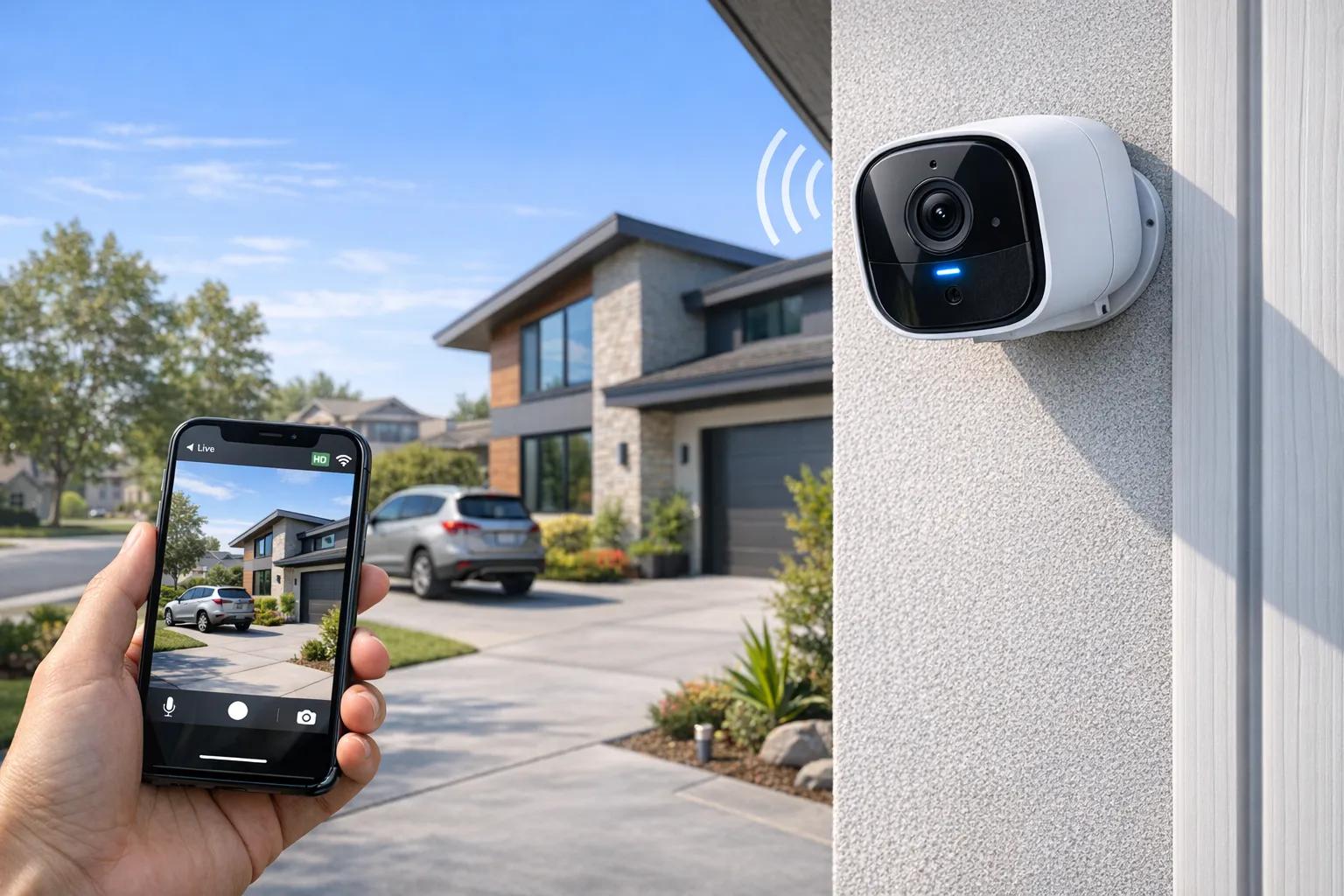
Wireless systems changed the calculation. Home surveillance cameras' wireless setups now run through a home's existing Wi-Fi network or a dedicated local network, without the need for a cable between every camera and a central recorder. Installation is faster, placement is more flexible, and the footage can often be accessed from a phone or laptop, regardless of where the homeowner is located.
That said, "wireless" does not mean the system runs entirely without infrastructure. Most wireless cameras still need a power source, whether from a nearby outlet or a rechargeable battery. The difference is that the video signal travels through a network connection rather than a dedicated coaxial or Ethernet cable.
Companies like Centex Security Cameras handle both wired and wireless installations across residential properties, and the choice between the two often comes down to the layout of the home and how permanent the installation needs to be.
What 24/7 Monitoring Actually Requires
The phrase "24/7 monitoring" is used broadly in the security industry, but it refers to two different things depending on context. It can mean the camera is recording continuously around the clock, or it can mean a monitoring center is actively watching the footage in real time. These are not the same thing, and homeowners benefit from understanding the difference before choosing a system.
Continuous Recording vs. Motion Triggered Recording
Most home surveillance cameras and wireless systems offer two recording modes. Continuous recording captures footage at all times, which requires significantly more storage. Motion-triggered recording only saves footage when the camera detects movement within a set zone.
For a residential property, motion-triggered recording is often the more practical choice. It reduces storage demands and makes it easier to review only the footage that matters. Cameras with accurate motion detection settings avoid false triggers from passing cars, tree branches, or changes in lighting.
Continuous recording makes more sense for commercial properties or for specific areas of a home where activity needs to be documented at all times, such as a front desk, a safe room, or a long driveway with no clear motion trigger zone.
Professional Monitoring Services
Some homeowners choose to pair their camera system with a professional monitoring service. In this arrangement, a monitoring center receives alerts when cameras detect motion and can contact the homeowner or emergency services if needed. This adds a layer of response capability that a self-monitored system does not have.
CCTV camera installation projects that include professional monitoring require the system to be connected to the monitoring provider's platform, which may affect hardware choices and network configuration.
Types of Wireless Cameras Used in Homes
Not every wireless camera is suited to every location. The physical design, lens type, and power source all affect where a camera can be placed and how well it performs.
Indoor Wireless Cameras
Indoor cameras are generally smaller and designed for placement on shelves, countertops, or wall mounts inside the home. They are used in living areas, hallways, nurseries, and near entry points inside the house. Most indoor wireless models connect directly to a home Wi-Fi network and are accessed through a mobile app.
Resolution for indoor cameras typically starts at 1080p. Cameras with wider-angle lenses, usually 110 to 130 degrees, can cover more of a room from a single mounting point.
Outdoor Wireless Cameras
Outdoor wireless cameras are built to handle weather exposure. They carry an IP rating that indicates resistance to dust and water, with IP65 or higher being the common standard for exterior installations. These cameras are placed at entry points, garage areas, side yards, and along fence lines.
Many outdoor wireless models include infrared night vision, which allows the camera to capture usable footage in low light without an external light source. Some models also include color night vision, which requires a minimum level of ambient light but produces footage that is easier to interpret.
Battery-Powered Wireless Cameras
Battery-powered cameras offer the most flexibility in placement because they do not need access to a power outlet. They are useful for locations where running power is inconvenient, such as outbuildings, gates, or rental properties where structural modifications are not permitted.
The tradeoff is battery life. Depending on the frequency of motion triggers and the resolution settings, batteries may need recharging every few weeks to several months. Some models use solar panels to extend the time between charges.
Key Features to Evaluate in a Wireless Surveillance System
When choosing home surveillance cameras with wireless options for a residential property, several technical features affect the usefulness of the system over time.
Video Resolution: 1080p is the baseline. 4K cameras capture more detail but require more storage and more network bandwidth. For most homes, 2K or 4K cameras at entry points and 1080p cameras in secondary locations are a reasonable balance.
Field of View: A narrow field of view, around 70 to 90 degrees, is useful for long corridors or driveways. A wide field of view, 110 degrees or more, covers broad areas like yards or parking areas.
Two-Way Audio: Cameras with built-in microphones and speakers allow the homeowner to speak through the camera remotely. This is useful at front doors, gates, or delivery areas.
Local vs. Cloud Storage: Local storage means footage is saved to a hard drive or memory card connected to a recorder on the property. Cloud storage sends footage to an off-site server, which is accessible even if the camera or recorder is damaged or stolen. Many systems support both options simultaneously.
Network Security: Wireless cameras connected to a home network are subject to the same security risks as any other networked device. Systems that use encrypted connections and require strong credentials reduce the risk of unauthorized access to the footage.
CCTV Camera Installation for Wireless Systems
The term CCTV camera installation traditionally refers to closed-circuit television systems, which use direct cable connections between cameras and a recorder. Wireless systems are technically IP camera systems, but the term CCTV camera installation is now used broadly to describe any professional camera installation project, regardless of whether cable or wireless transmission is involved.
Professional installation for a wireless home system typically includes the following steps.
First, a technician evaluates the property to identify coverage gaps, assess Wi-Fi signal strength at intended camera locations, and confirm where the recording equipment will be placed.
Second, cameras are mounted at the agreed locations, powered connections are made, and network settings are configured. For battery cameras, this step is shorter. For cameras that need outlet power, the technician may need to route a power cable discreetly along baseboards or through walls.
Third, the recording system is set up with appropriate settings for motion zones, recording schedules, and alert thresholds. Remote access is configured and tested before the technician leaves.
Centex Security Cameras handles the full installation process for residential clients, including the initial site assessment and the final walkthrough to confirm that every camera is positioned correctly and the system is functioning as intended.
Network Considerations for Wireless Surveillance
A wireless camera system is only as reliable as the network it runs on. Homeowners with older routers, thick walls, or large properties may find that their Wi-Fi signal does not reach every intended camera location with enough strength to maintain a stable video feed.
There are several ways to address this. A mesh network system, which uses multiple access points placed around the home, can extend coverage to areas where a single router signal is weak. Some wireless cameras support a protocol called Wi-Fi 6, which handles multiple devices on the same network more efficiently and reduces congestion.
For properties where network reliability is a concern, a hybrid approach is worth considering. Cameras in locations with strong Wi-Fi coverage can operate wirelessly, while cameras in signal dead zones can use a wired connection. Many modern recording systems support both camera types simultaneously.
A dedicated network for security cameras, separate from the home's primary Wi-Fi network, can also reduce interference from other devices and add a layer of network security by isolating the cameras from personal computers, phones, and smart home devices.
When Professional Help Makes Sense
Self-installed wireless cameras are widely available and work adequately for basic coverage at a small property. Where professional CCTV camera installation adds clear value is in larger homes, properties with complex layouts, or situations where the homeowner wants a system that has been configured correctly from the start and comes with reliable after-installation support.
A professional installer brings knowledge of camera placement that goes beyond what a product manual covers. They know how lighting conditions at different times of day affect image quality. how to position cameras to reduce blind spots, and how to configure motion zones that minimize false alerts without missing actual activity.
Centex Security Cameras offers residential installation services for homeowners who want a wireless system that is sized correctly for their property and set up to function reliably over time. Their process includes a site evaluation before any equipment is purchased, which helps avoid the common problem of buying hardware that does not fit the actual layout of the home.
For homeowners considering home surveillance cameras and wireless systems, working with an installer who has handled similar residential projects is the most straightforward way to get a system that does what it is supposed to do.
Summary
Wireless home surveillance cameras give homeowners flexibility in placement and easier access to live and recorded footage. The right system depends on the size of the property, the number of entry points, the strength of the home network, and whether the homeowner wants continuous recording or motion-triggered alerts. Professional CCTV camera installation ensures the system is configured correctly and that cameras are placed where they will actually capture useful footage rather than empty stretches of wall or sky.